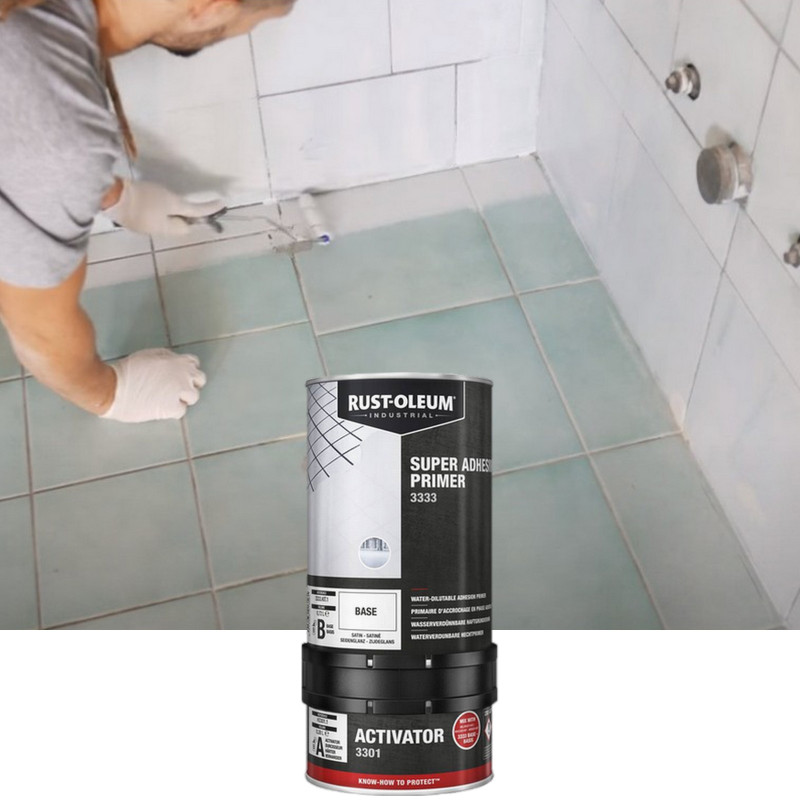
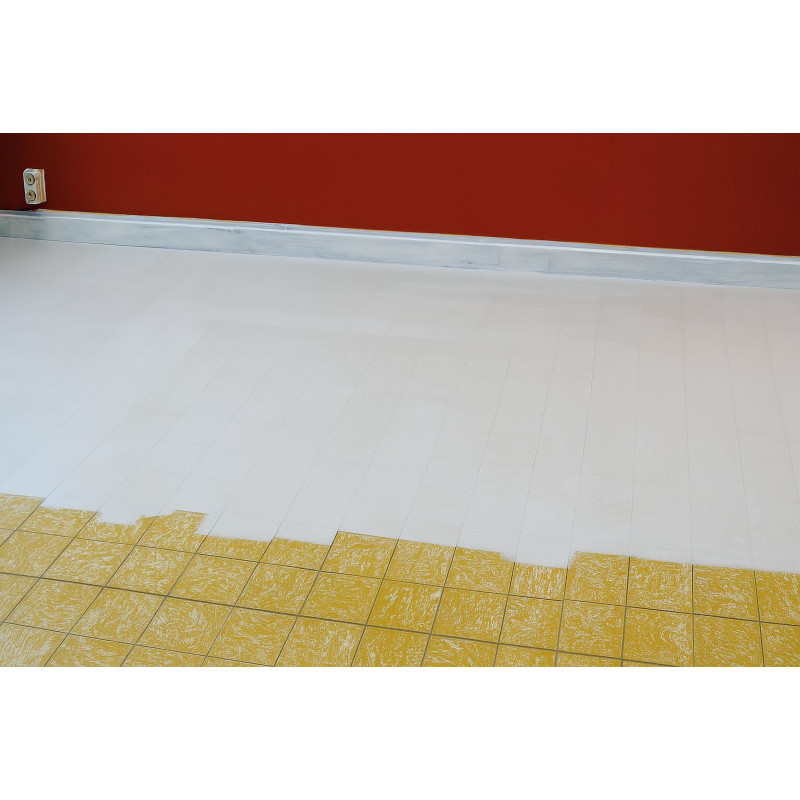
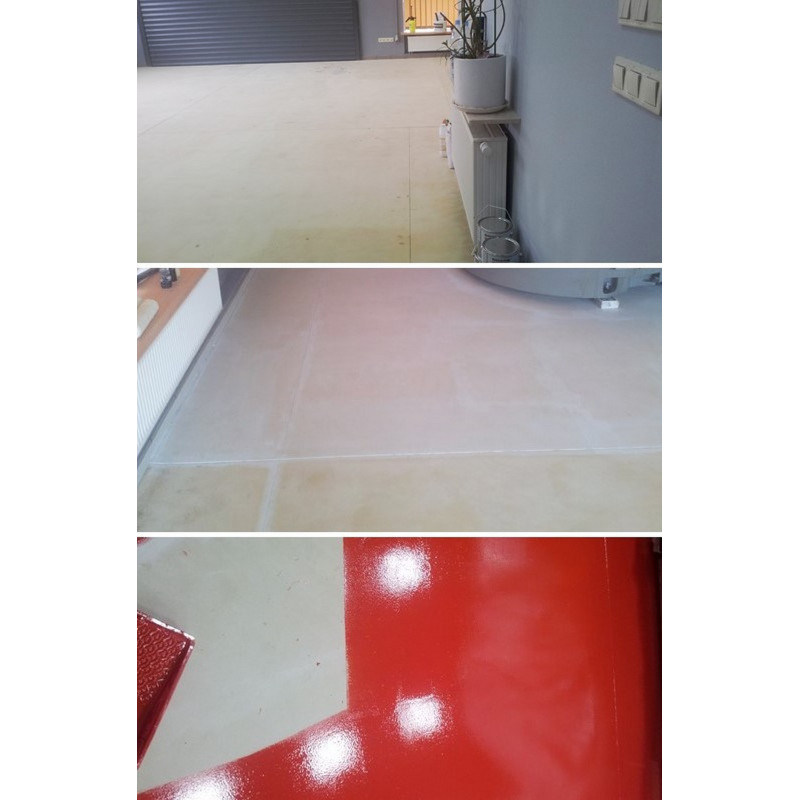
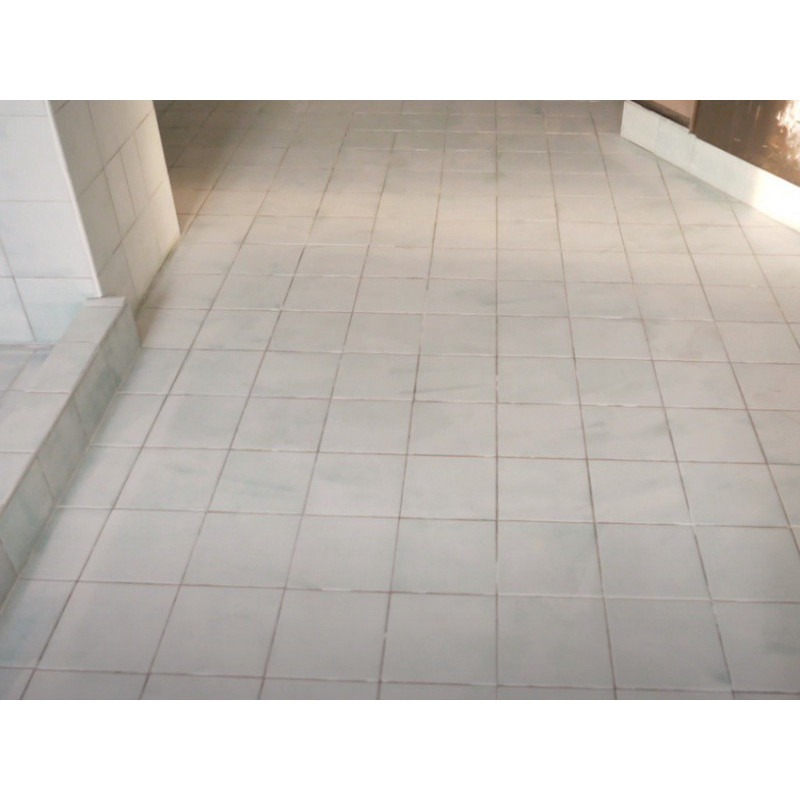
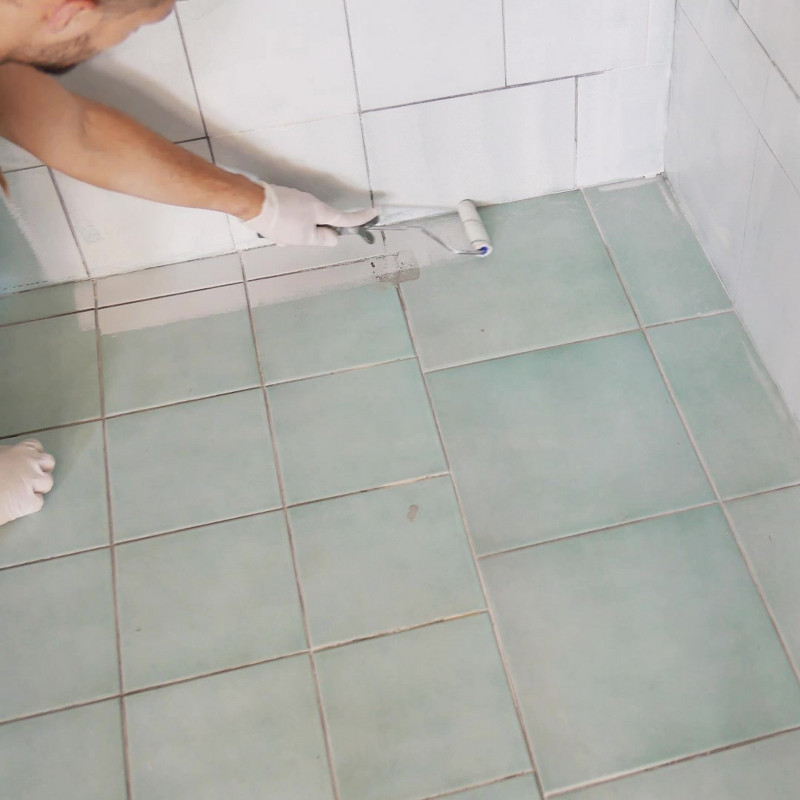
In the case of tiles, surface preparation is a key process in achieving a durable bond between the coating and the substrate. Before painting, the tiles must be free of loose particles, dust, and limescale, and must be degreased and dry.
Removing limescale: First of all, especially in areas exposed to water (such as around taps or in showers), it is necessary to remove any limescale deposits. You can do this by using commercially available limescale removers. Apply them according to the instructions on the packaging to effectively remove unwanted deposits.
Degreasing the surface: The next step is to thoroughly clean the tiles of grease and dust. This is best done using warm water mixed with detergent, such as dishwashing liquid. Wash the tiles with this mixture and then rinse them thoroughly with water to remove any detergent residue. It is important to allow the surface to dry completely after this operation.
Matting smooth tiles: If you are dealing with very smooth tiles, such as glazed tiles, which are more difficult to paint due to their non-porous surface, they should be matted additionally. Using fine sandpaper or a sander will create better adhesion for the paint. Remember to sand tiles that are already clean to avoid rubbing in dirt. After matting, the surface should be dusted again, washed again, and rinsed. The surface should be completely dry.
Matting tiles is particularly recommended for tiles exposed to heavier loads, i.e., floor tiles and any tiles exposed to moisture.
Thanks to these steps, the tile surface will be properly prepared for painting, which will increase the chance of a durable and aesthetic final result.
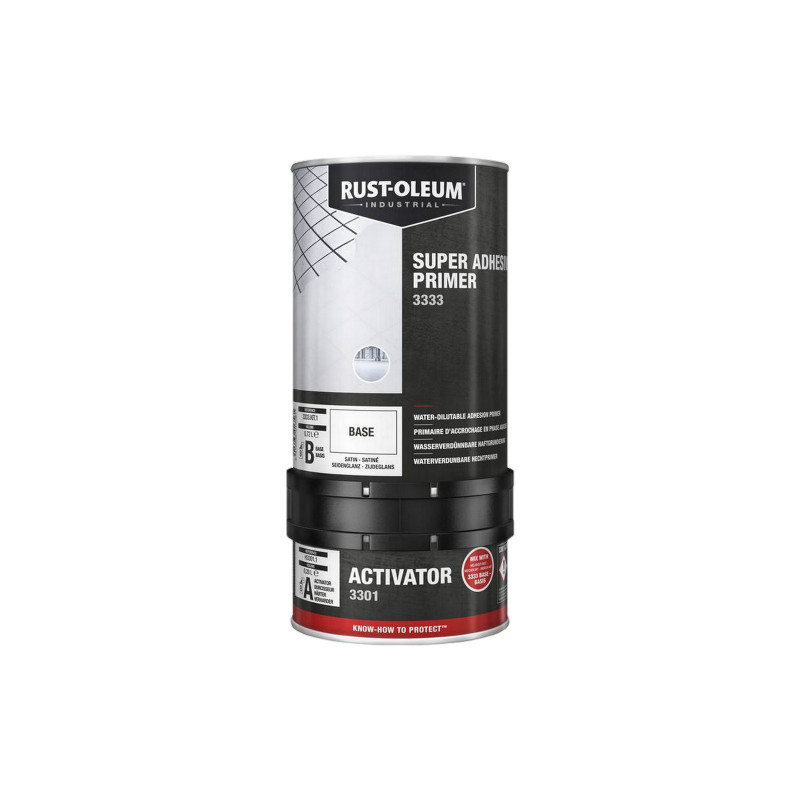
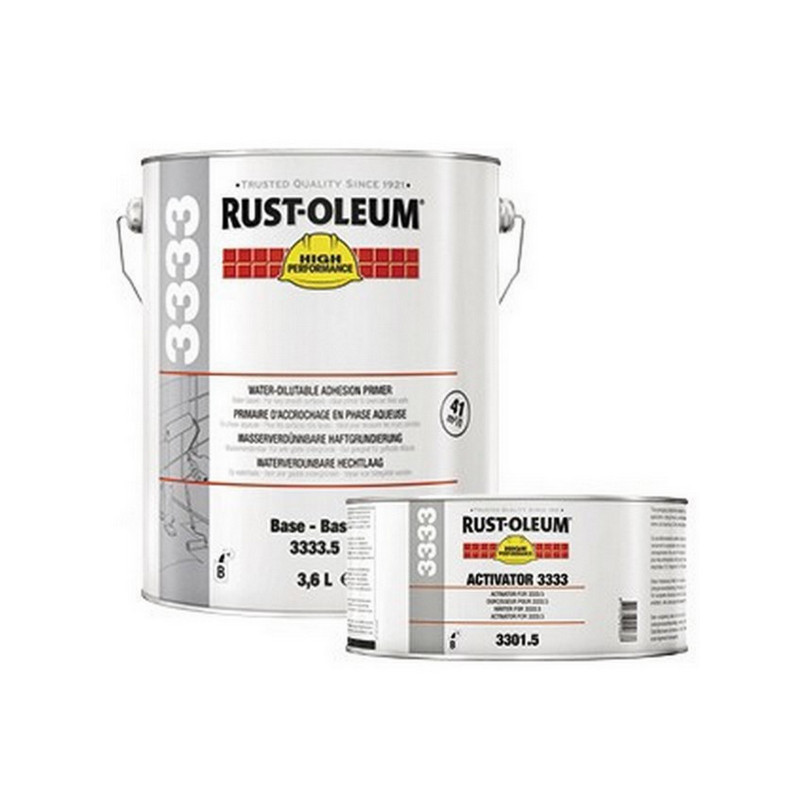
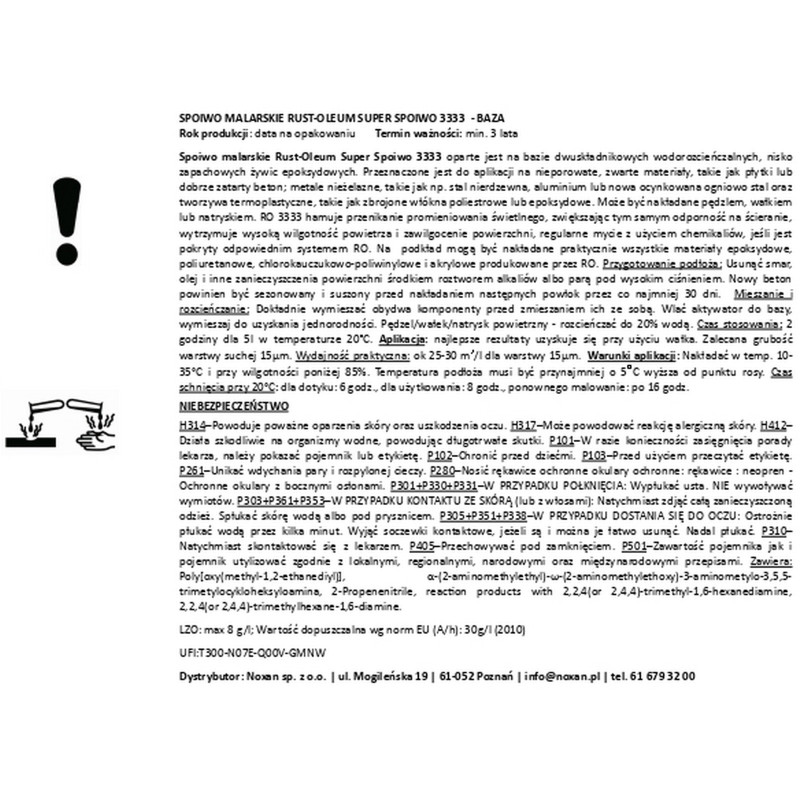
Mix both components thoroughly before mixing them together. Mix by shaking or with a low-speed mixer. Mixing ratio by volume: 0.72 l of base to 0.28 l of hardener. Pot life: 2 hours at 20°C; after 2 hours, the material is no longer usable (it becomes hardened).
Brush: dilute with 20% water by volume. Use brushes with long natural/synthetic bristles. Check the wet thickness, avoid applying too thick a layer of the product. A minimum of 25 m²/l should be painted.
Roller: dilute with 20% water by volume. Use rollers with short mohair or velvet bristles, check the wet layer thickness, avoid excessive thickness. The minimum coverage is 25 m²/l.
Air spray: dilute with up to 20% water by volume, nozzle diameter 1.2 ÷ 2.0 mm, spray pressure: 2 ÷ 4 atm. Check the thickness of the wet layer, avoid excessive thickness. The minimum coverage is 25 m²/l.
Cleaning: clean immediately after application with hot soapy water. If the product has dried, use a mixture of acetone and xylene. Use brushes and/or rollers.